







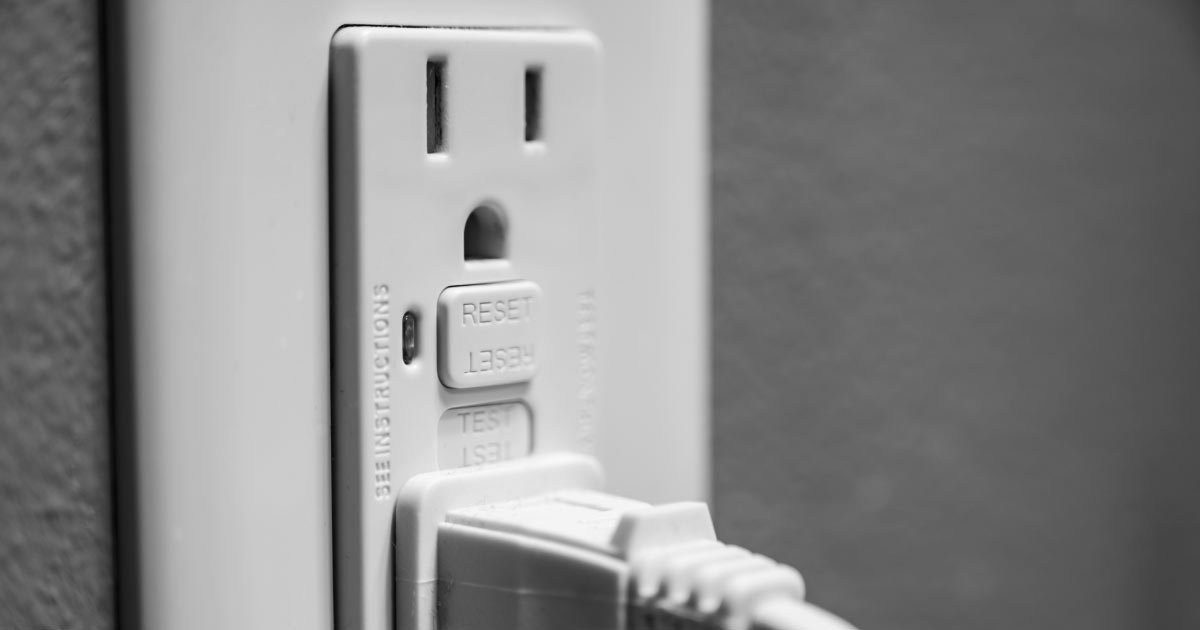
For added protection in your home, consider installing GFCI (Ground Fault Circuit Interruptor) outlets on plugs next to sinks, tubs, laundry rooms, garages, and outside. A GFCI outlet protects against electric shock by monitoring the flow of current through a circuit and shutting down power quickly if a dangerous imbalance is detected.
Fast shutdown greatly reduces the possibility of electric shock in areas where people often come into contact with moisture, concrete floors, or the elements, such as in Flagstaff and much of Northern Arizona.
Northern Arizona Electrical Solutions provides residential installation, replacement, troubleshooting and repair services for GFCI outlets, including clean workmanship and comprehensive explanations of how these outlets work and what they protect against. Continue reading to discover what you should know about GFCIs in your home.
Why GFCI Outlets Matter in Northern Arizona Homes
Homes in the Flagstaff area often contain older wiring, remodel additions, garages converted to workshops, and exterior outlets that experience some degree of snow, rain, and moisture from wind-driven conditions. GFCI protection helps reduce the risk of electric shock in these types of installations and weather conditions.
When you update existing bathrooms, complete unfinished basements, or bring an electrical system up to modern safety standards, installing GFCI outlets provides an additional layer of shock and electrocution protection.
Where You Typically Need GFCI Protection at Home
Homeowners commonly add or update GFCI protection in:
- Bathroom and powder room;
- Receptacles serving the counter and sink areas of the kitchen;
- Laundry room and utility area;
- Garage and workshop;
- Outdoor receptacles for patio or deck lighting, shed lights, Christmas light strings, and tool use; and
- Basement or other damp areas in your home or building.
For owners with spas or hot tubs located near a pool, GFCI protection is also required. NAES can review your home’s electrical system and provide you with practical recommendations to improve safety.
Signs You Should Install or Replace a GFCI
Unsure whether you could benefit from an upgrade? Here are some of the more frequently reported issues customers report:
-
- Outlets located near water without GFCI protection;
- GFCI outlet that keeps tripping, does not reset correctly, or does not function consistently;
- Test and Reset buttons or the buttons are stuck;
- Outlet is warm to the touch;
- Buzzing sound when plugging device in (or nothing plugged in);
- Discolored or burnt plug ends; or
- Loose/wiggly plug fit.
A lot of Flagstaff homes still have the old two-prong only plugs, which is another reason homeowners look to upgrade to a safter receptacle.
Other times, we see a home upgrade that was done by a previous homeowner that didn’t take GFCIs into consideration.
GFCI Outlet vs GFCI Breaker: Which Is Better?
There are two common methods for providing GFCI protection.
Outlet
A GFCI outlet can be used when you’re looking for protection at a specific location or when you’d like to protect a small group of outlets from the same location.
Breaker
A GFCI breaker protects an entire circuit from your electrical panel, which is often less messy than protecting multiple outlets on the same circuit.
The type of GFCI protection that will work best for you will depend on the way your house is wired and what you’re trying to protect. NAES assists you in identifying the solution that meets your objectives and avoids problems such as partial protection or confusion over how to reset it.
How NAES Handles GFCI Installation
At NAES, we take pride in making sure our customers receive complete service through our installations. Before installing a GFCI, we look at the two main factors: circuit wiring and location.
When servicing devices, we typically perform the following:
-
-
- Ensure that the GFCI is installed in a correct place and identify why protection is needed;
- Verify that the wires for the GFCI are installed according to NEC 2020 (National Electrical Code);
- Install/replace the correct type of GFCI and secure the mounting of this device;
- Verify proper grounding and polarity of the GFCI and test the operation of the GFCI; and
- Label the GFCIs where necessary and explain to our customers what is being protected, where to reset the GFCI, and what to look for in the future.
-
What to Expect During Your Appointment
In case you are wondering, here are the typical steps we follow when conducting GFCI upgrades or repairs.
#1 Assess Existing Wiring Setup
An electrician assesses the outlet location, potential moisture exposure, and the circuit feeding power to it are all taken into consideration.
#2 Plan for New Outlet Install
We provide you with a clear recommendation regarding whether a GFCI outlet, breaker solution or replacement is required.
#3 GFCI Wall Plug Installation
When installing your new outlet, the power is turned off, wiring is corrected (if necessary), and your new safety wall plug is installed – secured to a wall stud or other permanent fixture.
#4 Test GFCI Functionality
After installation, check to verify that the wall outlet functions correctly using the test/reset feature and to confirm that the circuit delivers power to plugged-in devices.
#5 Cleanup & Walkthrough
We also make sure to clean up after ourselves and explained how to test your GFCI and when to call for assistance if anything changes.
Safety Details Homeowners Miss
Although GFCIs have the potential to be used by homeowners without much effort in terms of understanding how GFCI works before installing them, it is very important that when using these products, one pays close attention to the installation of GFCIs. NAES typically finds the following common installation problems:
-
-
- Miswired GFCIs connected to other electrical outlets
- Loose wiring connections resulting in overheating and/or intermittent power
- GFCIs installed in outdoor locations (unless installed by the manufacturer as outdoor-rated devices with proper weatherproofing)
- GFCIs that are connecting to devices that are crowded in the wall cavity, are worn, or are in the process of being replaced
- Repeatedly tripping GFCIs with appliances/garage equipment caused either from a faulty GFCI or an underlying issue in the design of the GFCI outlet.
-
If you have a home with older electrical systems or a series of piecemeal additions/renovations, it is important to review how GFCIs are being installed, so you can be aware of any potential hidden dangers.
Serving Flagstaff and Nearby Northern Arizona Communities
NAES provides service to the Flagstaff area and other areas of Northern Arizona. We provide service to older homes located near downtown Flagstaff and properties near Northern Arizona University, as well as new neighborhoods and rural areas that may have exterior circuits.
Estimates, Warranty & Emergency Help
NAES is licensed, insured, and bonded. We stand behind our workmanship with a warranty. We also offer free quotes.
If you think that your situation constitutes an emergency safety issue, we provide 24/7 electrical service. Same-day service for all types of upgrades may be available; however, same-day service is subject to availability.
Schedule GFCI Outlet Installation
Are you ready to install, replace, or troubleshoot a GFCI outlet? Contact Northern Arizona Electrical Solutions for service. If you are unsure of where GFCI protection is needed, we can assist you in prioritizing your bathrooms, kitchen, garage, laundry room, and outdoor electrical outlets, as they tend to be the most important.